LEGO® Speed Champions · McLaren · 2021

McLaren Elva

McLaren's open-cockpit, no-windscreen Ultimate Series roadster — translated to the 8-stud Speed Champions scale.

Set #76902 2021 263 pieces 8-stud Retired

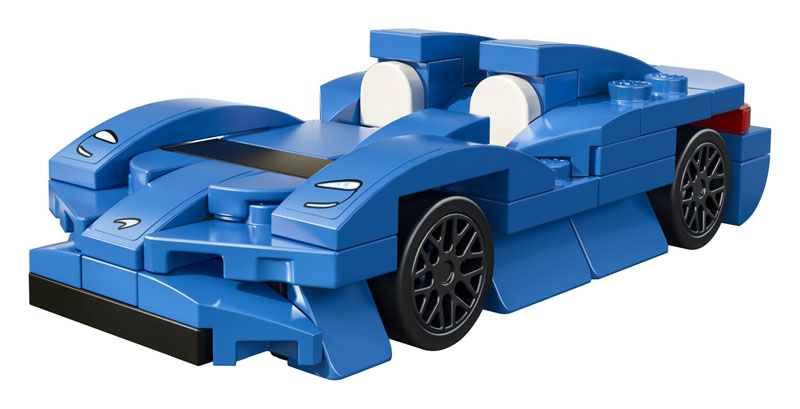
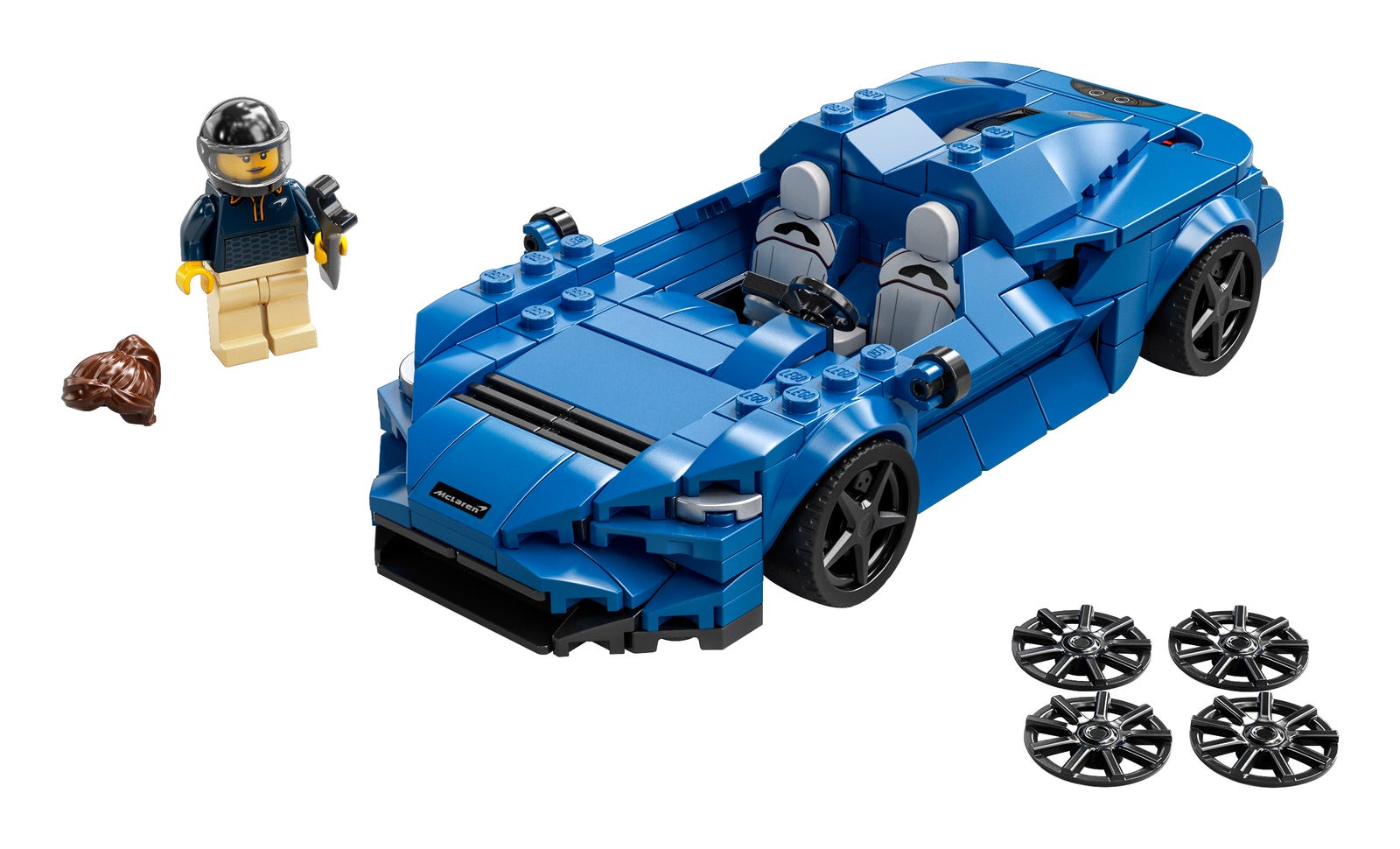
76902 captures the McLaren Elva, the open-cockpit hypercar McLaren launched as part of its Ultimate Series in 2020. The Elva has no roof, no windows, and — in its base specification — no windscreen, using McLaren's patented Active Air Management System (AAMS) to generate a virtual canopy of moving air over the cabin instead. LEGO® 76902 reproduces the windscreen-free configuration with its sweeping carbon-style nacelles.

LEGO® Speed Champions set 76902 McLaren Elva — official product image
Official LEGO® Group product image for set 76902 McLaren Elva. Source: Rebrickable.

Browse this set's coordinates

Compare with another set →
Share

76902 models the 2020–2021 McLaren Elva — the lightest road car McLaren has ever built and the brand's first open-cockpit Ultimate Series machine.

McLaren Elva open-cockpit roadster, photographed in the launch livery.
Photo: Calreyn88 · CC BY-SA 4.0 · McLaren Elva, launch-spec roadster.

THE ROADSTER

McLaren Elva

McLaren's no-windscreen, no-roof Ultimate Series hypercar — limited to 149 customer cars.

McLaren revealed the Elva in November 2019 as the fourth member of its Ultimate Series — joining the F1, Senna and Speedtail — and as the lightest road car the company had ever built, with a quoted dry weight under 1,150 kg. The name pays tribute to the early-1960s McLaren-Elva M1A, M1B and M1C race cars built in collaboration with the Elva car company. LEGO® 76902 models the production Elva (see Brickset 76902).

The car uses a development of McLaren's M840T 4.0-litre twin-turbo V8 producing 815 hp and 590 lb-ft of torque, paired with a seven-speed dual-clutch gearbox. The chassis is a unique carbon-fibre Monocage construction that does without an A-pillar or windscreen mount; instead, McLaren's Active Air Management System raises a small forward deflector at speed, parting the airflow into a low-pressure 'bubble' over the cabin. A fixed-windscreen version was made available later for North American customers and other markets where the AAMS configuration was not road-legal.

Production was originally announced as 399 cars but reduced to 249 and ultimately to 149 — the lowest run of any McLaren Ultimate Series road car other than the F1 itself. Customer deliveries began in late 2020. McLaren ended Elva production at the end of 2021, which is also why 76906/76902 LEGO® line context shows 76902 retired the year after the real car finished its production run.

Engine
4.0L M840T twin-turbocharged V8
Power
815 hp / 600 kW; 800 N·m torque
Top speed
203 mph (327 km/h) — manufacturer claim
Years built
2020–2021 (149 customer cars in AAMS / windscreen-equipped variants)
You've built it. Now display it.

Brix Plus stands are built around the exact dimensions of every LEGO® Speed Champions set — including 76902. Made for collectors, by collectors.

Shop display stands →

Display ideas

  • Pair 76902 with 75892 McLaren Senna for a McLaren Ultimate Series shelf (Senna + Elva).
  • Group 76902 with 76918 McLaren Solus GT & F1 LM for the full LEGO® McLaren road-racer back catalogue.
  • Display 76902 next to 76919 McLaren MCL60 and 77251 McLaren MCL38 for a McLaren road + F1 contrast.

People

The Elva project was led from McLaren Special Operations (MSO) in Woking and engineered around the company's existing Ultimate Series platform.

Andy Palmer

MANAGING DIRECTOR, MCLAREN ULTIMATE SERIES

Palmer ran McLaren's Ultimate Series at the time of the Elva's launch and was the public face of the no-windscreen design decision, defending it against industry scepticism in launch interviews and at Pebble Beach 2019. He laid the engineering case that the Active Air Management System could substitute for a fixed canopy at road speeds (see LEGO® 76902 launch coverage and Brickset 76902).

Rob Melville

DESIGN DIRECTOR, MCLAREN AUTOMOTIVE

Melville's team designed the Elva's flowing carbon-fibre nacelles and the interlocked aero forms that LEGO® reproduces in 76902. The Elva is widely credited as Melville's most adventurous Ultimate Series shape — a sculptural object first and a road car second.

The build

Scale and era

76902 sits in the LEGO® Speed Champions 8-stud era. It was launched 1 June 2021 alongside 76904 Mopar Dodge//SRT Top Fuel Dragster and 76905 Ford GT Heritage Edition & Bronco R.

Build highlights

Notable on the build are the printed open-cockpit roll hoops, the carbon-style headlight nacelles and the absence of a windscreen — a design decision LEGO® has rarely made on Speed Champions road cars. The driver minifigure has a printed-helmet head.

What the 263 pieces buys you

At 263 pieces, 76902 is a typical 8-stud single-car build with a recommended 30–40 minute build time.

FAQ

Is LEGO® set 76902 still available?
No. 76902 launched on 1 June 2021 and was retired on 31 December 2022 according to Brickset. Secondary-market copies are available on BrickLink.
How big is the LEGO® McLaren Elva when built?
Approximately 14 cm long and 7 cm wide — the standard 8-stud-era LEGO® Speed Champions footprint. See the LEGO.com listing.
How many pieces does LEGO® set 76902 have?
263 pieces, including one driver minifigure, per Brickset.
Does the real McLaren Elva have a windscreen?
Originally no — the launch-spec Elva used McLaren's Active Air Management System to deflect airflow over the cabin in place of a fixed windscreen. A windscreen-equipped variant was added later for North American customers where AAMS-only was not road-legal. LEGO® 76902 models the windscreen-free version (see Brickset 76902).
Is this a 6-stud or 8-stud LEGO® Speed Champions set?
8-stud. 76902 uses the current LEGO® Speed Champions scale.
What other LEGO® McLaren Speed Champions sets are there?
Other LEGO® McLaren Speed Champions sets include 75892 Senna, 76918 Solus GT & F1 LM, 76919 MCL60, 77251 MCL38 (LEGO®) and 77257 W1 (Brickset).

Related sets

Keep browsing

step through the McLaren range, or see what else dropped in 2021.

Sources

  1. The LEGO® Group — primary
  2. Brickset — primary
  3. BrickLink — primary
  4. Rebrickable — primary
  5. McLaren Automotive Limited — primary
  6. Wikipedia contributors — wikipedia
  7. Wikimedia Commons — wikipedia