LEGO® Speed Champions · Lotus · 2022

Lotus Evija

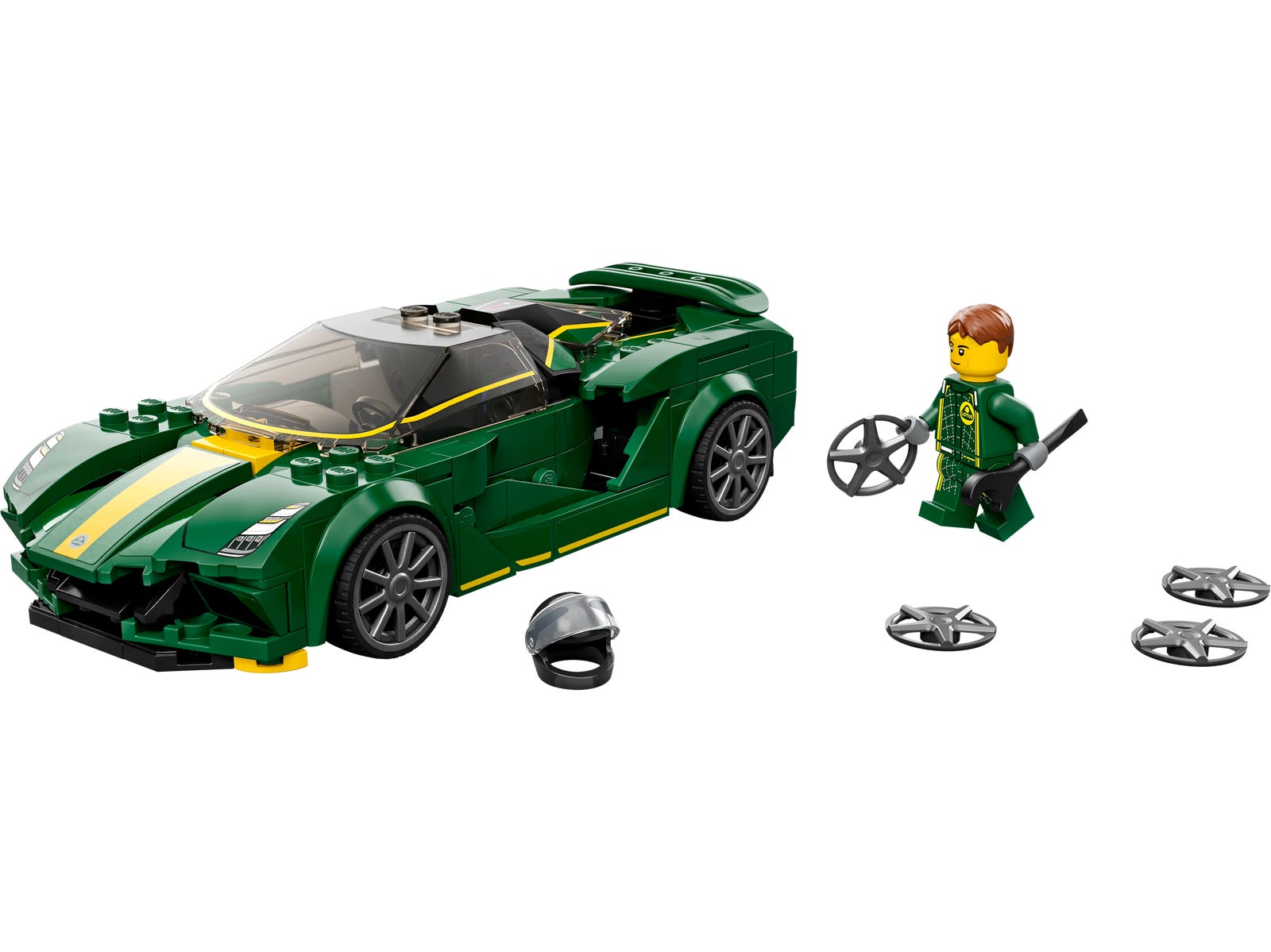
A 247-piece miniature of Lotus's first all-electric hypercar — the Type 130 Evija, and the first new Lotus model in more than a decade.

Set #76907 2022 247 pieces 8-stud Retired

76907 captures the Lotus Evija (project codename Type 130) — the British marque's first ground-up new model under Geely ownership, and one of the first all-electric hypercars to enter limited series production. With a target peak output of around 2,000 PS from four electric motors, the Evija represents Lotus's pivot from low-volume internal-combustion sports cars (Elise, Exige, Evora) to a high-performance EV future. Brix Plus presents 76907 as the first LEGO® Lotus in the modern Speed Champions catalogue, and as a piece of the marque's 70-year heritage transitioning into the electric era.

LEGO® Speed Champions set 76907 Lotus Evija, product image
LEGO® Speed Champions 76907. Source: LEGO.com.

Browse this set's coordinates

Compare with another set →
Share

76907 contains a single complete car: the Lotus Evija — the marque's first all-electric hypercar, limited to 130 production units.

2020 Lotus Evija at the London Concours of Elegance
Photo: Liam Walker · CC BY-SA 4.0 · via Wikimedia Commons

THE HYPERCAR

Lotus Evija (Type 130)

Quad-motor all-electric hypercar — Lotus's first new model under Geely, target ~2,000 PS, limited to 130 units

The Lotus Evija (project codename Type 130) was unveiled in July 2019 as the first all-electric hypercar from Lotus and the first new Lotus production car developed under the ownership of Zhejiang Geely Holding Group, who acquired a controlling stake in 2017. Per Lotus's official Evija page, the production specification targets four permanent-magnet electric motors (one per wheel) supplied by Integral Powertrain, fed by a 70 kWh Williams Advanced Engineering battery pack mounted longitudinally behind the cockpit. Peak output is quoted at 2,011 PS (1,973 hp / 1,500 kW), with target performance of 0–100 km/h in under three seconds and a top speed in excess of 320 km/h (200 mph). The car captured by LEGO® 76907 and indexed at Brickset represents this first-of-kind specification.

Visually the Evija's signature element is the pair of large Venturi tunnels that pass through the rear bodywork — visible from the side and rear of the car as fully open passages, designed by Lotus design director Russell Carr's team to channel high-velocity air through the bodywork rather than over it. The carbon-fibre monocoque chassis is shared development with Williams Advanced Engineering, and the production-intent dry weight is approximately 1,680 kg — heavier than a comparable internal-combustion Lotus, but light by all-electric hypercar standards. Per Lotus's official corporate history, the car was developed and assembled at Lotus's Hethel facility in Norfolk, UK, with very limited production cells.

The Evija's launch was punctuated by significant delays. Originally slated for first customer deliveries in 2020, production was repeatedly pushed back through the COVID-19 pandemic, supply-chain shortages, and battery-pack qualification issues. The first customer car was finally handed over in 2023, with build numbers ramping slowly through 2024–2025 toward the announced 130-unit cap. Pricing was set at approximately £2.04 million plus local taxes per Lotus and Brickset's set notes — making it the most expensive new Lotus ever sold, and putting the car alongside contemporary all-electric hypercars from Rimac and Pininfarina rather than against ICE rivals. The shape captured by LEGO® 76907 is the production-intent body, not the earlier 2019 reveal car.

Powertrain
4× permanent-magnet AC motors (one per wheel)
Peak power
≈2,011 PS (1,973 hp / 1,500 kW) target
Battery
70 kWh Williams Advanced Engineering pack
0–100 km/h
Under 3 seconds (target)
Top speed
>320 km/h (>200 mph)
Production
Limited to 130 units
Price
≈£2.04 million plus taxes

You've built it. Now display it.

Brix Plus stands are built around the exact dimensions of every LEGO® Speed Champions set — including 76907's broad, low Evija silhouette. Made for collectors, by collectors.

Shop display stands →

Display ideas

  • Anchor an electric-hypercar shelf — the Evija alongside any other EV-era performance sets you own.
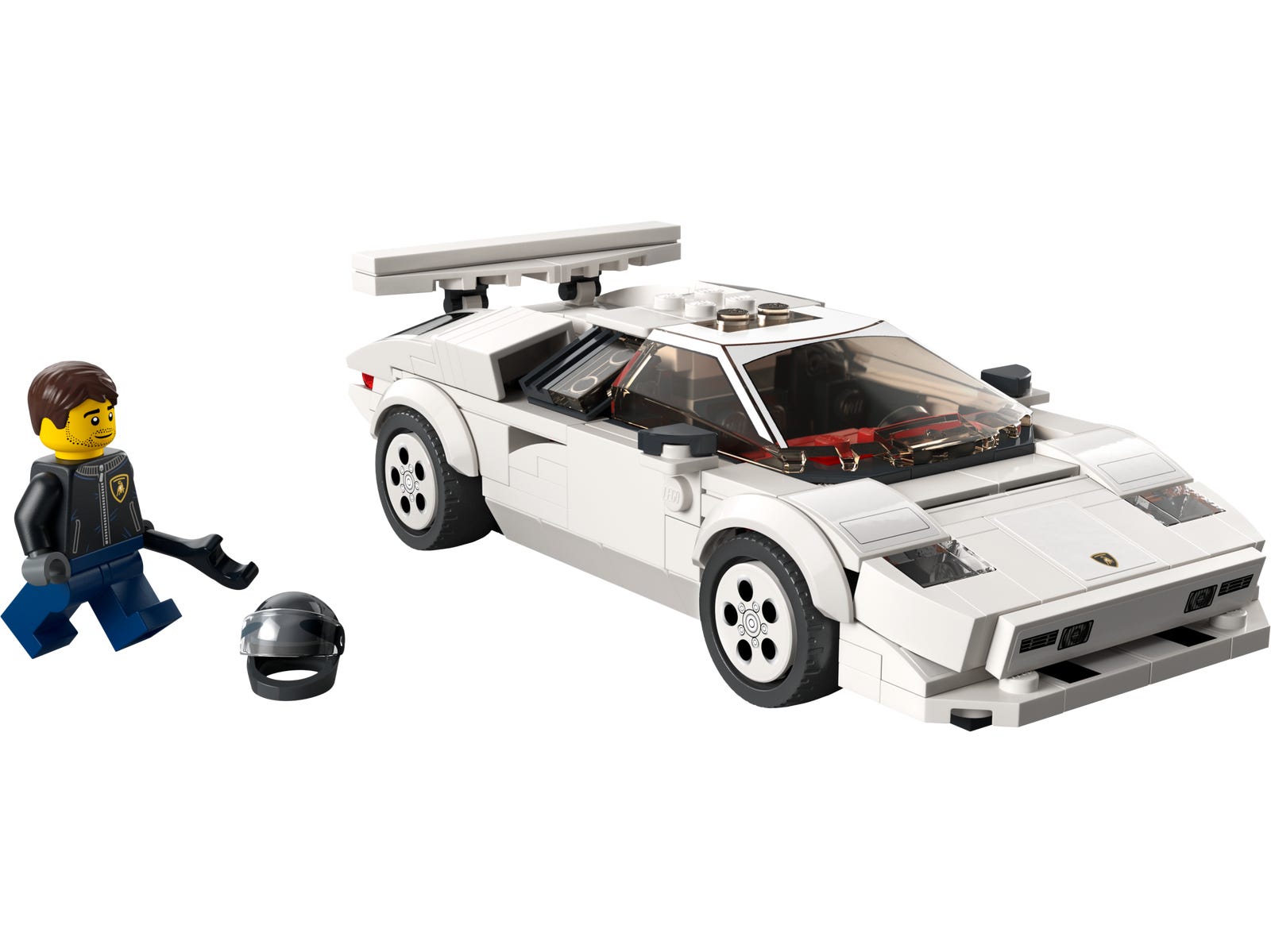
  • Pair 76907 with 76908 Lamborghini Countach for a 2022 wave hypercar duo (one electric, one V12).
  • Group with 76902 McLaren Elva for a contrasting British-marque limited-run open-hypercar pair.

People

Two figures shape the Evija story: the Lotus design director who led its visual language, and the CEO who positioned the car as Lotus's pivot to electrification.

Russell Carr

DESIGN DIRECTOR, LOTUS CARS

Carr has been Lotus's design director since 2010 and led the Evija's exterior and interior design programme. The Evija's signature Venturi tunnels — fully open passages cut through the rear bodywork — are the visual element his team is most associated with, and they directly inform the silhouette captured by LEGO® 76907. Carr's design language is deliberately a continuation of the Type 49 / 72 Formula 1 era's emphasis on form-following-aerodynamic-function, applied to a road car for the first time in the Lotus catalogue. Per Lotus's official heritage materials and contemporary period coverage in Autocar, Top Gear, and CAR Magazine, his role on the Evija programme is well documented at Brickset 76907's set notes.

Phil Popham

CEO, LOTUS CARS (2018–2020)

Popham was Lotus's CEO during the period when the Evija programme moved from concept to confirmed production, and he led the company's strategic positioning of the Evija as Lotus's all-electric pivot under Geely ownership. The Evija was conceived as a halo car — a flagship that would re-establish Lotus's hypercar credentials — and the limited 130-unit run was deliberately set to match the Type 130 codename and signal scarcity. Popham's tenure ended in mid-2020 as the Evija programme moved into pre-production; his role is documented in Lotus's official corporate history, contemporary Lotus press materials, and Brickset's set context for 76907.

The build

Scale and era

76907 sits in the LEGO® Speed Champions 8-stud era — the line shifted from the original 6-stud scale in 2020. At 247 pieces it is a typical single-vehicle set in size, comparable to its 2022 wave-mate 76908 Lamborghini Countach (262 pieces) and slightly smaller than 76902 McLaren Elva (263 pieces).

Build highlights

76907's defining build challenge is rendering the Evija's signature Venturi tunnels at brick scale. The set uses curved slope and arch elements to suggest the open rear passages without literally cutting voids through the bodywork — a sympathetic compromise rather than a literal recreation. The split forward-hinged doors are evoked by colour-block printed elements, and the silver-and-yellow press-launch livery (yellow accents on a silver carbon body) is captured in printed parts.

What the 247 pieces buys you

247 pieces is roughly a 30–45 minute build for an experienced builder. The set delivers one complete vehicle plus a single unique driver minifigure. By the standards of single-vehicle 8-stud Speed Champions sets it sits at the smaller end of the range — the focus is the silhouette rather than mechanical detail.

Minifigure (1)

76907 includes one driver minifigure, unique to this set per Brickset's minifigure index. The figure wears a yellow-and-silver-themed racing suit consistent with Lotus's Evija press-launch livery.

FAQ

Common questions about LEGO® 76907 Lotus Evija.

Is LEGO® set 76907 still available?
No. 76907 launched in March 2022 and was retired in 2023 according to Brickset. Sealed copies trade at modest premiums on BrickLink.
How big is the LEGO® Lotus Evija when built?
Approximately 14 cm long and 6 cm wide, consistent with the LEGO® Speed Champions 8-stud single-vehicle scale. See the LEGO.com listing for current archived dimensions.
How many pieces does LEGO® set 76907 have?
247 pieces and 1 driver minifigure (unique to this set), per Brickset.
Is the real Lotus Evija actually electric?
Yes — the Evija is Lotus's first all-electric production car, with four permanent-magnet electric motors (one per wheel) and a 70 kWh Williams Advanced Engineering battery pack. Per Lotus's official Evija page, peak output is targeted at approximately 2,011 PS (1,973 hp).
How many real Evijas will be built?
Lotus has announced a maximum production run of 130 units worldwide, matching the Type 130 codename. First customer deliveries began in 2023 after pandemic and supply-chain delays. See Lotus and Brickset 76907 for context.
What other LEGO® Lotus Speed Champions sets are there?
76907 is the only LEGO® Lotus in the modern 8-stud Speed Champions catalogue as of 2026. Lotus has been a relatively rare brand in the line — the Evija is a one-off representation of the marque to date, indexed at Brickset.

Related sets

Keep browsing

see what else dropped in 2022.

Sources

  1. The LEGO® Group — primary
  2. Brickset — primary
  3. BrickLink — primary
  4. Rebrickable — primary
  5. Lotus Cars — primary
  6. Wikipedia contributors — wikipedia
  7. Wikimedia Commons — wikipedia